
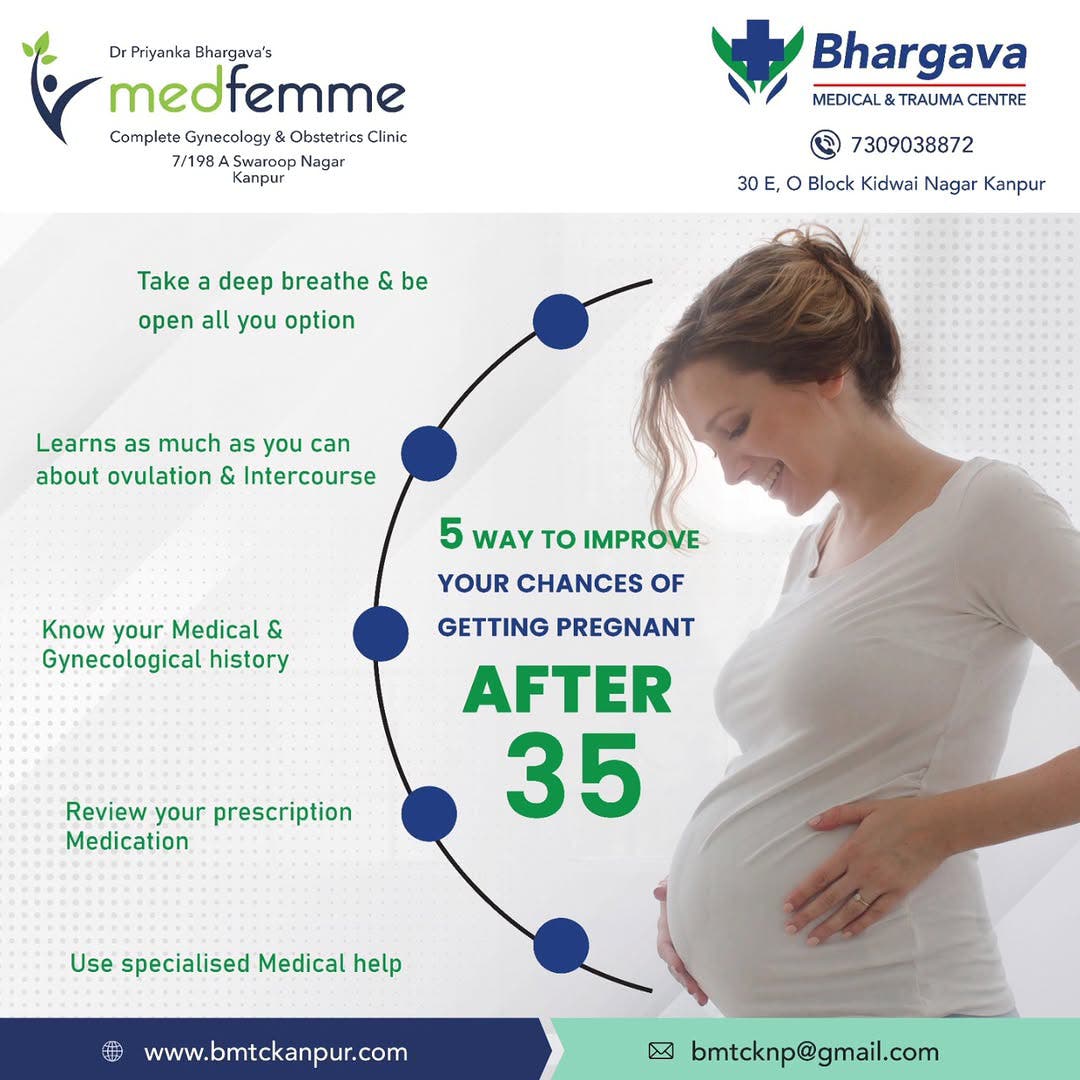
Fertility After 35 – What Every Woman Should Know

Many women today choose to start or expand their families later in life. While pregnancy after 35 is common and often successful, understanding age-related fertility changes can help women make informed decisions.
Fertility and Aging
A woman's fertility naturally begins to decline in her early 30s, with a more significant decrease occurring after the age of 35. This decline is mainly due to a reduction in both the quantity and quality of eggs available in the ovaries.
Risks and Challenges
Women over 35 may:
- Take longer to conceive.
- Have a higher risk of miscarriage.
- Face increased chances of chromosomal abnormalities.
- Experience more pregnancy complications.
Improving Fertility After 35
To improve your chances:
- Maintain a healthy body weight.
- Eat a nutrient-rich diet.
- Manage stress effectively.
- Avoid smoking and alcohol.
- Monitor your reproductive health regularly.
When to Seek Help
Women who have been trying to conceive for six months or longer without success should consider consulting a fertility specialist for evaluation and guidance.
Frequently Asked Questions
Does fertility drop significantly after 35?
Yes, there is a natural decline in egg quantity and quality.
How long should I try before seeing a doctor?
If you are over 35, consult a specialist if you haven't conceived after 6 months of trying.
What are the risks of pregnancy after 35?
Higher risks of chromosomal issues, gestational diabetes, and miscarriage.
Can I improve my fertility after 35?
Yes, through healthy weight management, nutrition, and stress reduction.
Who is the best fertility specialist in Kanpur?
Dr. Priyanka Bhargava at Medfemme Clinic offers personalized fertility planning.