
Why Is It So Hard to Sleep During Pregnancy? Causes, Tips & When to See a Doctor

iKey Takeaways
- ✓Sleep problems can occur during any trimester, but the causes often change as pregnancy progresses.
- ✓Physical discomfort, frequent urination, heartburn, leg cramps, and anxiety can disturb sleep.
- ✓Side sleeping with supportive pillows can improve comfort as pregnancy progresses.
- ✓Avoid taking sleep medicines or supplements during pregnancy without medical advice.
- ✓Persistent or severe sleep problems and concerning symptoms should be discussed with your doctor.
Quick Answer
Sleep problems are common during pregnancy and can be caused by hormonal changes, frequent urination, a growing belly, heartburn, leg cramps, baby movements, and anxiety. Simple changes to your sleep position, evening routine, meals, and daytime activity may improve sleep, but persistent or severe problems should be discussed with your doctor.
Key Takeaways
- Sleep problems can occur during any trimester, but the causes often change as pregnancy progresses.
- Physical discomfort, frequent urination, heartburn, leg cramps, and anxiety can disturb sleep.
- Side sleeping with supportive pillows can improve comfort as pregnancy progresses.
- Avoid taking sleep medicines or supplements during pregnancy without medical advice.
- Loud snoring, gasping during sleep, severe insomnia, or excessive daytime sleepiness should be discussed with your doctor.
Why Is It Hard to Sleep During Pregnancy?
Pregnancy can affect sleep because of physical, hormonal, and emotional changes. Frequent urination, nausea, heartburn, an increasing belly, leg discomfort, baby's movements, and worries about childbirth can all make it harder to fall asleep or stay asleep.
The reason for poor sleep can also change from one trimester to another.
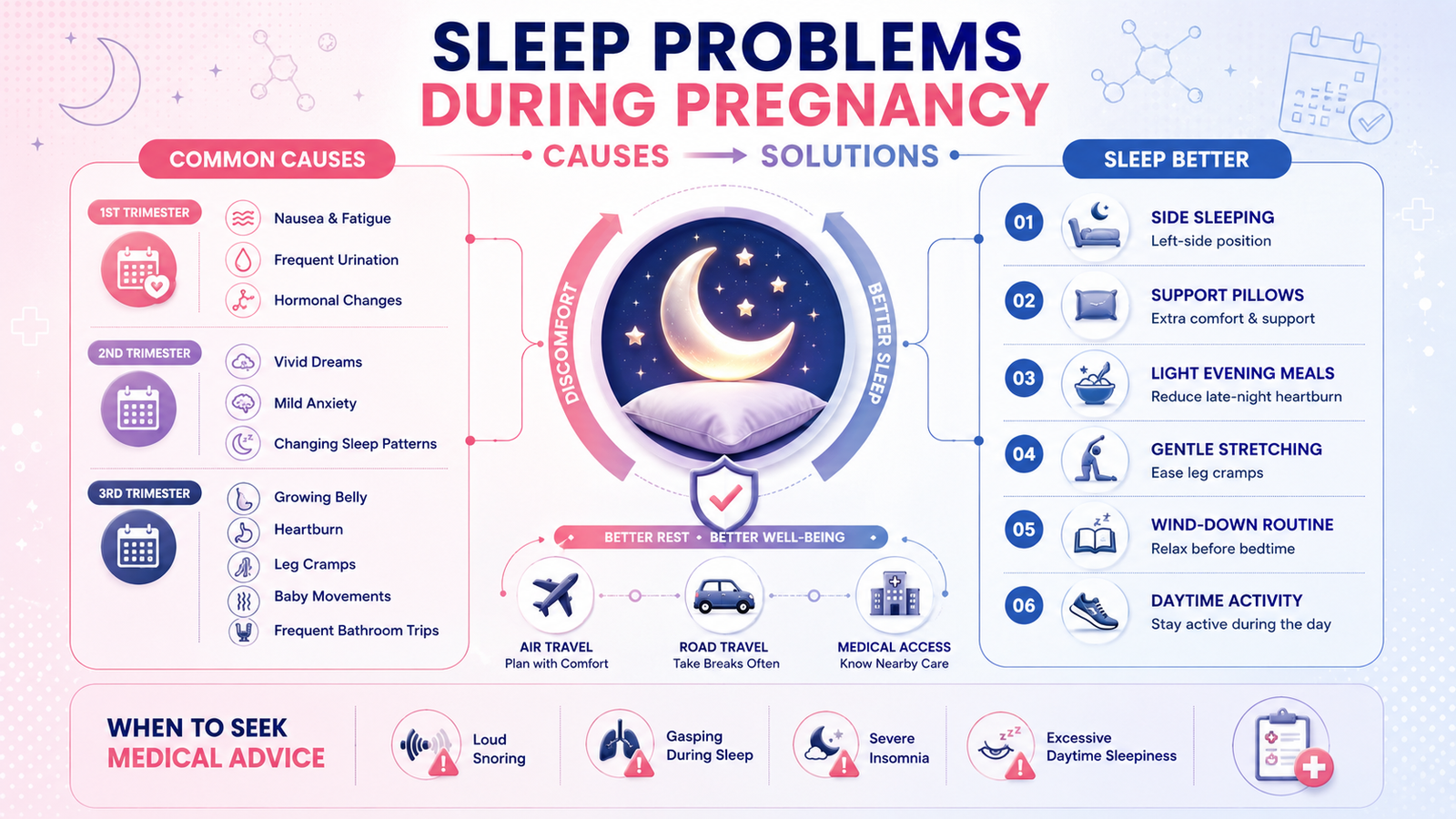
What Causes Sleep Problems During Each Trimester?
| Trimester | Common Reasons Sleep May Be Disrupted |
|---|---|
| First trimester | Hormonal changes, increased tiredness, nausea, and frequent urination |
| Second trimester | Growing belly, vivid dreams, heartburn, and occasional anxiety |
| Third trimester | Difficulty getting comfortable, frequent urination, heartburn, leg cramps, baby's movements, and anxiety about labour or parenthood |
Not every pregnant woman experiences the same symptoms, and sleep quality can vary throughout pregnancy.
What Are the Most Common Sleep Problems During Pregnancy?
Why am I having trouble falling or staying asleep?
Pregnancy-related discomfort, hormonal changes, frequent urination, anxiety, and physical changes can contribute to insomnia or frequent waking.
What causes restless legs during pregnancy?
Restless legs syndrome can cause an uncomfortable urge to move the legs, often becoming more noticeable at night. If symptoms are frequent or disruptive, discuss them with your doctor because nutritional deficiencies and other factors may sometimes need evaluation.
Can heartburn affect sleep during pregnancy?
Yes. Heartburn and acid reflux may become more uncomfortable when lying down. Eating lighter meals, avoiding foods that trigger symptoms, and allowing time between meals and bedtime may help.
Can anxiety affect sleep during pregnancy?
Yes. Concerns about childbirth, the baby's health, parenting, or other life changes can make it difficult to relax at night. Relaxation exercises, journaling, and discussing persistent anxiety with your doctor or a qualified professional may help.
What Is the Best Sleeping Position During Pregnancy?
As pregnancy progresses, side sleeping is generally recommended, particularly later in pregnancy. Either side can be comfortable, and using a pillow between the knees or supporting the abdomen can reduce pressure and improve comfort.
If you are unsure about the safest sleeping position for your stage of pregnancy, ask your pregnancy care provider for individual guidance.
How Can I Sleep Better During Pregnancy?
A few practical habits may help:
- Keep a consistent bedtime and wake-up routine.
- Use pillows to support your abdomen, back, or knees.
- Avoid heavy meals close to bedtime if you experience heartburn.
- Stay hydrated during the day while avoiding excessive fluids close to bedtime if frequent urination is disturbing your sleep.
- Try gentle stretching or relaxation breathing before bed.
- Keep your bedroom comfortable, quiet, and dark.
- Stay physically active during the day if your pregnancy care provider says exercise is appropriate for you.
- Limit stimulating activities and screen use close to bedtime.
Is It Safe to Take Sleep Medicines During Pregnancy?
Do not start sleeping pills, supplements, or herbal sleep remedies during pregnancy without consulting your doctor. Some medicines and supplements may not be appropriate during pregnancy, so your doctor can help you choose a safer approach based on your symptoms and medical history.
Can Poor Sleep During Pregnancy Affect the Baby?
Occasional poor sleep is common during pregnancy. However, persistent or severe sleep problems, particularly when associated with conditions such as sleep apnea, should be discussed with your doctor because untreated sleep disorders can affect the mother's health and pregnancy.
When Should I See a Doctor About Sleep Problems During Pregnancy?
Talk to your doctor if sleep problems are persistent, severe, or affecting your ability to function during the day. You should also discuss symptoms such as:
- Loud, persistent snoring
- Gasping or pauses in breathing during sleep
- Excessive daytime sleepiness
- Severe or persistent insomnia
- Restless legs that significantly disrupt sleep
- Other concerning symptoms during pregnancy, such as severe headache, vision changes, sudden swelling, or significant shortness of breath
These symptoms may require medical evaluation rather than being treated as ordinary pregnancy discomforts.
Frequently Asked Questions About Sleep During Pregnancy
Why can't I sleep during pregnancy?
Sleep can become difficult because of hormonal changes, frequent urination, physical discomfort, heartburn, leg cramps, baby's movements, and anxiety. The causes may change as pregnancy progresses.
What is the best sleeping position during pregnancy?
Side sleeping is generally recommended as pregnancy progresses. Either side can be comfortable, and pillows can be used to support the abdomen, back, and knees.
Can I take a sleeping pill during pregnancy?
Do not take sleeping medicines, supplements, or herbal remedies during pregnancy without medical advice. Ask your doctor about safe options for your specific situation.
Why do I wake up frequently to urinate during pregnancy?
Hormonal changes and pressure from the growing uterus on the bladder can increase the need to urinate during pregnancy, which may interrupt sleep.
Can heartburn cause sleep problems during pregnancy?
Yes. Heartburn can become worse when lying down and may make it difficult to fall asleep or stay asleep. Meal timing and other lifestyle adjustments may help.
When should I see a doctor for pregnancy-related sleep problems?
Consult your doctor if sleep problems are severe or persistent, affect your daytime functioning, or occur with symptoms such as loud snoring, gasping during sleep, excessive daytime sleepiness, severe headache, vision changes, or sudden swelling.
What Should You Remember About Sleep During Pregnancy?
Sleep disruption is common during pregnancy, but persistent or severe sleep problems should not simply be ignored. Understanding the cause, improving sleep habits, using comfortable sleeping positions, and discussing concerning symptoms with your doctor can help support better sleep and overall pregnancy well-being.
If you are experiencing persistent sleep problems during pregnancy, Dr. Priyanka Bhargava at Medfemme Women's Clinic, Kanpur can provide pregnancy and gynecological care based on your individual symptoms and medical history.
Medical Review
Medically reviewed by Dr. Priyanka Bhargava, Medfemme Women's Clinic, Kanpur.
Medical Disclaimer
This article is intended for general educational purposes and does not replace an individual medical consultation, diagnosis, or treatment plan. Consult a qualified healthcare professional for persistent, severe, or concerning symptoms during pregnancy.
When Should You Seek Medical Advice?
Contact your pregnancy care provider if you have persistent or severe insomnia, loud snoring or gasping during sleep, excessive daytime sleepiness, or concerning pregnancy symptoms such as severe headache, vision changes, or sudden swelling.
Frequently Asked Questions
Why can't I sleep during pregnancy?
Sleep can become difficult because of hormonal changes, frequent urination, physical discomfort, heartburn, leg cramps, baby's movements, and anxiety. The causes may change as pregnancy progresses.
What is the best sleeping position during pregnancy?
Side sleeping is generally recommended as pregnancy progresses. Either side can be comfortable, and pillows can be used to support the abdomen, back, and knees.
Can I take a sleeping pill during pregnancy?
Do not take sleeping medicines, supplements, or herbal remedies during pregnancy without medical advice. Ask your doctor about safe options for your specific situation.
Can heartburn cause sleep problems during pregnancy?
Yes. Heartburn can become worse when lying down and may make it difficult to fall asleep or stay asleep. Meal timing and other lifestyle adjustments may help.
When should I see a doctor for pregnancy-related sleep problems?
Consult your doctor if sleep problems are severe or persistent, affect your daytime functioning, or occur with symptoms such as loud snoring, gasping during sleep, excessive daytime sleepiness, severe headache, vision changes, or sudden swelling.